

Haptic hearing aid
Mosaic 3 haptic wristband

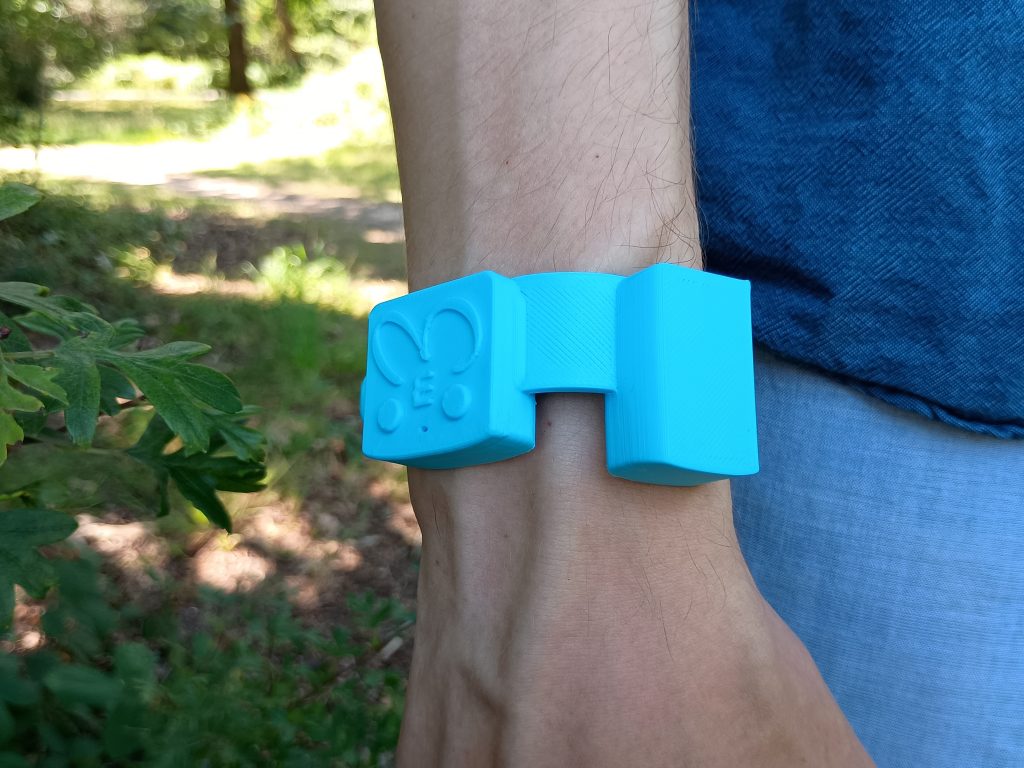
The Mosaic 3 is our latest prototype and the first device designed for use beyond the laboratory, enabling people to use it in their everyday lives. It is currently in the mid-development stage and builds on the capabilities of the Mosaic 2 in several important ways:
- It produces a wider range of vibration patterns, allowing more sound information to be conveyed to the brain through the skin
- It uses a more advanced algorithm to extract sound information and convert it into vibrations
- It wirelessly connects to our custom neckband and remote microphone systems
- It is more power-efficient, providing longer battery life
Mosaic 3 neckband microphone system
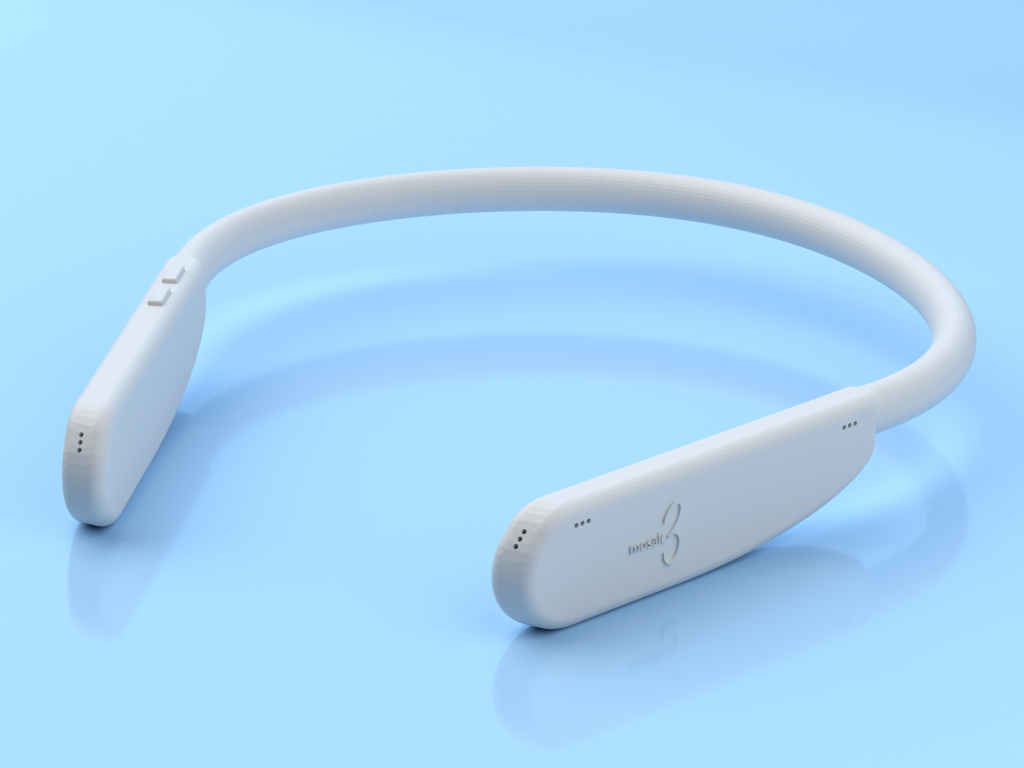
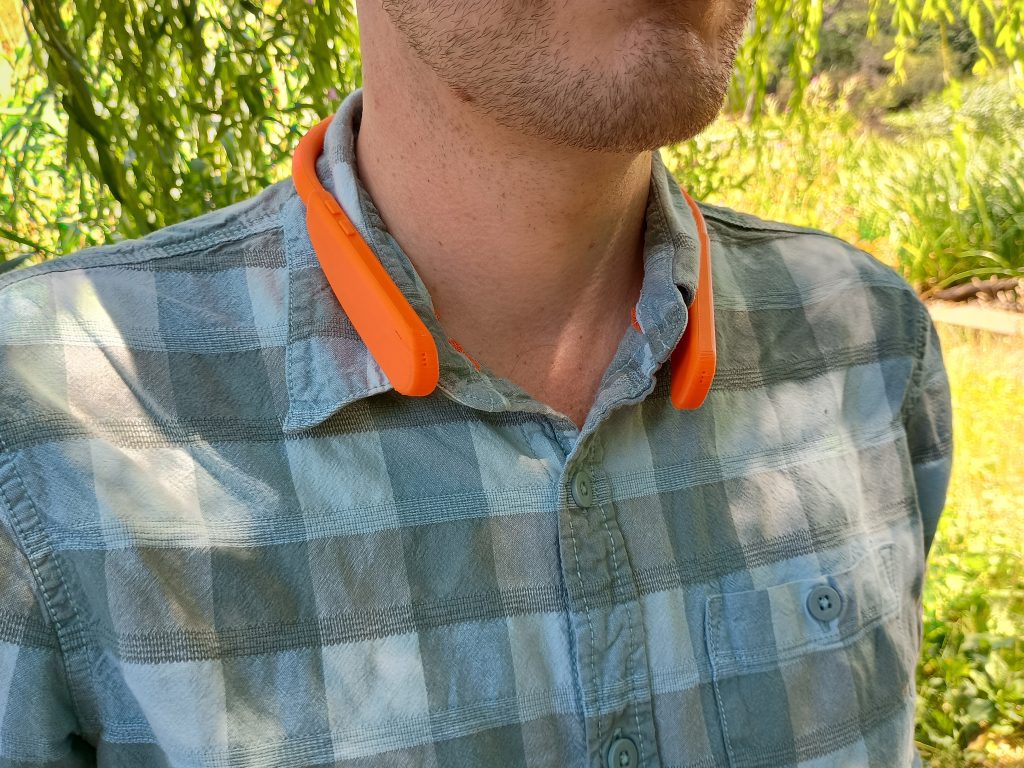
Our wireless neckband microphone system helps users stay aware of their surroundings whether they are walking through a city, enjoying a park, or relaxing at home. It can also focus on one or more speakers during conversations, making it easier to follow speech in challenging listening environments.
Mosaic 3 remote microphone system
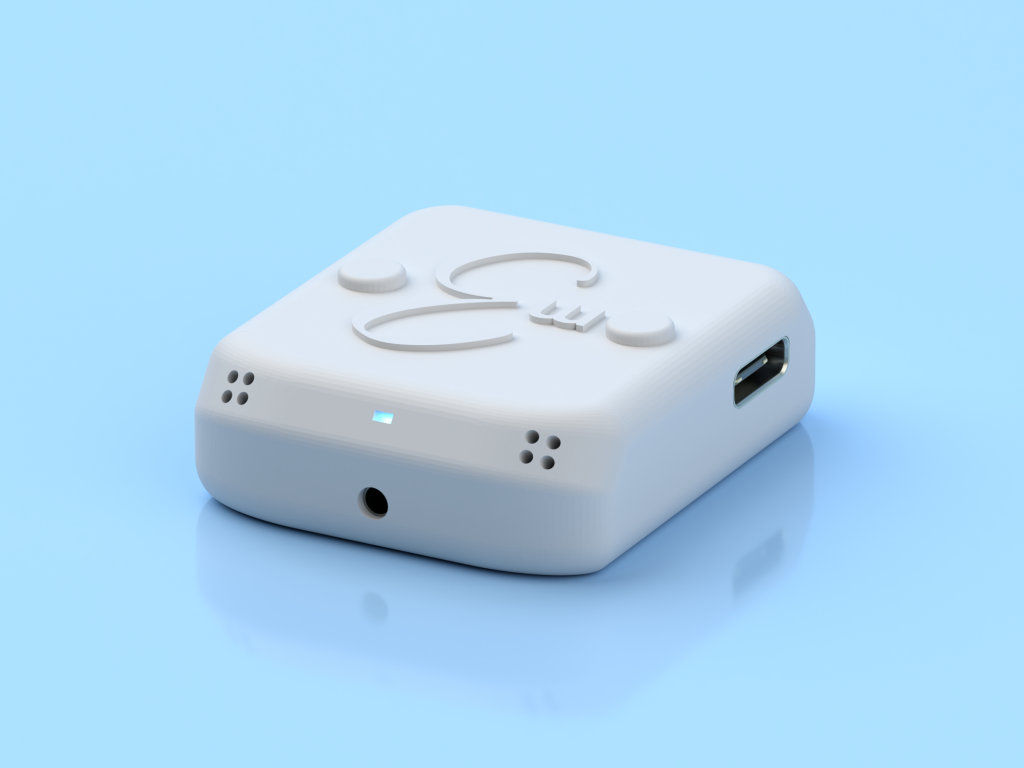
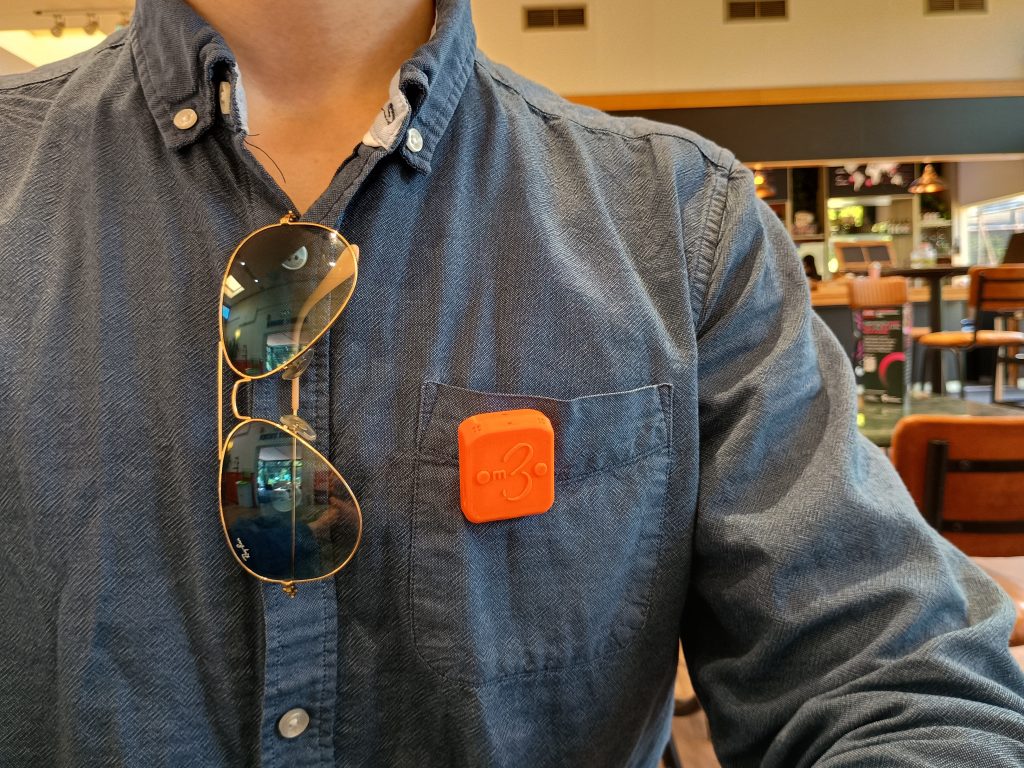
Our wireless remote microphone system has three main modes of operation:
- Lapel microphone: Worn as a lapel microphone (as shown in the image), it captures speech from a friend in a café or a teacher in a classroom
- Table microphone: Placed on a table, it captures speech from one or more people, making it ideal for conversations in noisy cafés, meetings, or social gatherings
- Direct audio connection: Plugged directly into a television, computer, or smartphone, it delivers audio to the Mosaic 3 for a clear and reliable haptic experience across films, podcasts, music, phone calls, and other media
Mosaic 2
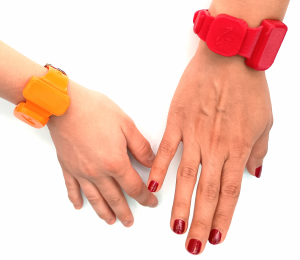
The Mosaic 2 is a laboratory prototype at an advanced stage of development. It includes several important features:
- It produces a wide range of vibration patterns using its super-wide-band shaker design
- It operates effectively silently while vibrating
- It has a long battery life
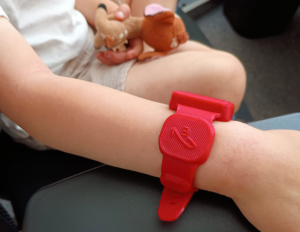
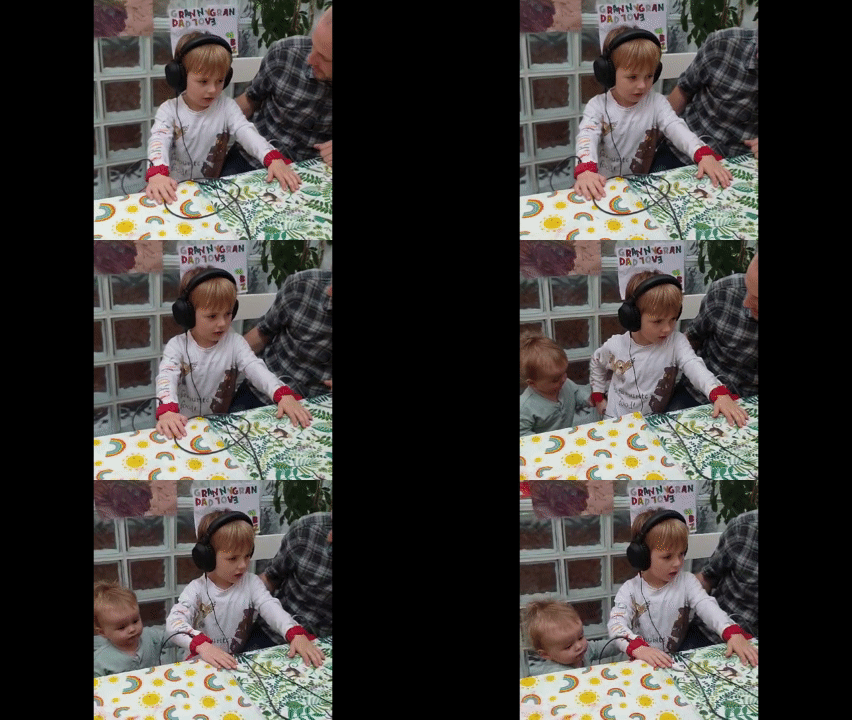
Image: Testing the Mosaic 2 with children sometimes got tricky!
Earlier prototypes
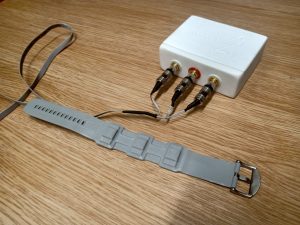
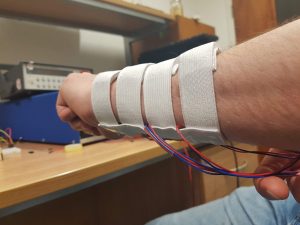
Before developing the Mosaic 2 and Mosaic 3, we built and tested many earlier prototypes. Some of them are shown below.
Bone-conduction hearing aid
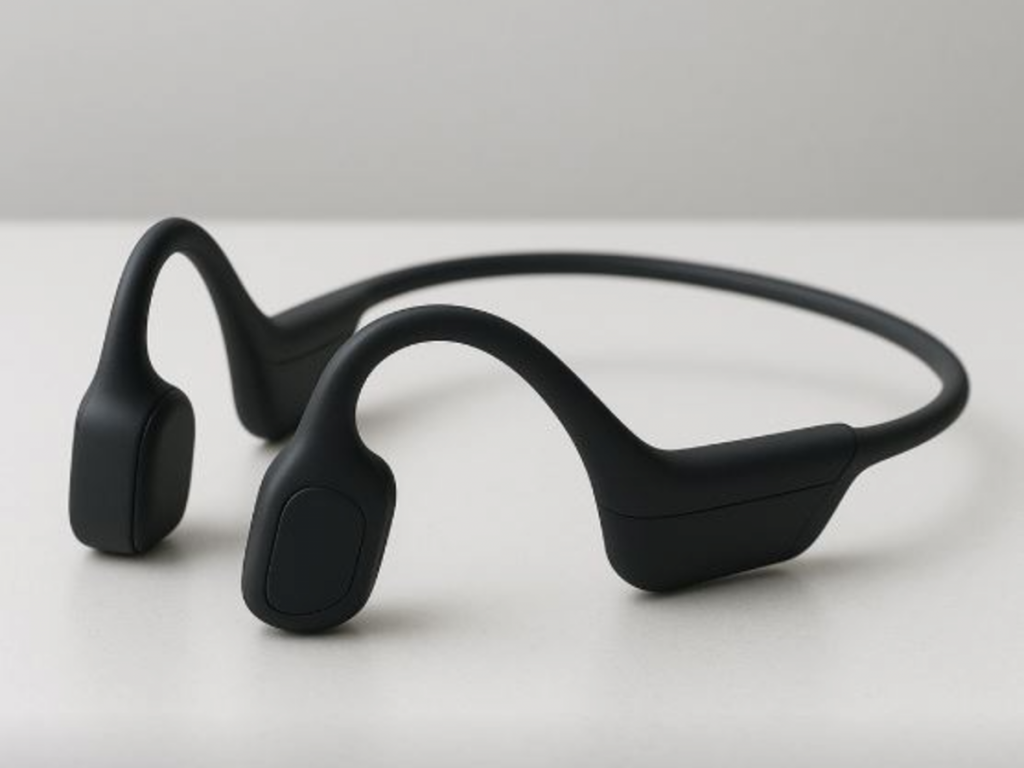
We are in the early stages of developing a low-cost, over-the-counter bone-conduction hearing aid designed to support children with glue ear in low-resource settings. Building on our research showing the benefits of direct-to-consumer bone-conduction technology, we are collaborating with Dr. Alan Sanderson at Brighton and Sussex Medical School (BSMS) to make effective hearing care accessible where it is needed most.
Haptic balance aid
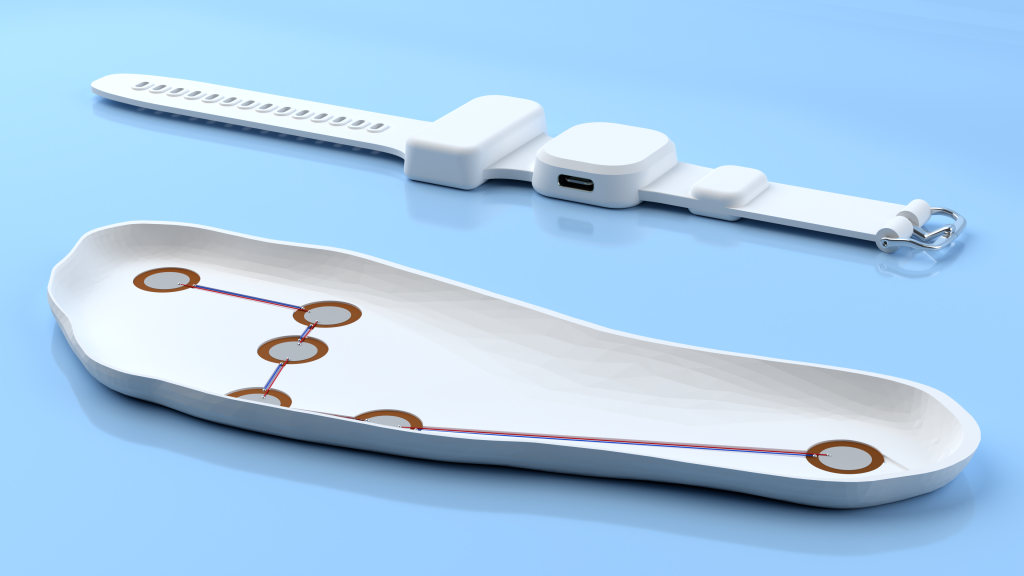
We are in the early stages of developing a prototype haptic balance aid designed to provide tactile feedback to individuals living with balance and vestibular disorders. Led by Dr. Igor Sobyanin, this project aims to create an accessible, non-invasive device that improves stability, confidence, and mobility in daily life.
Our development platform
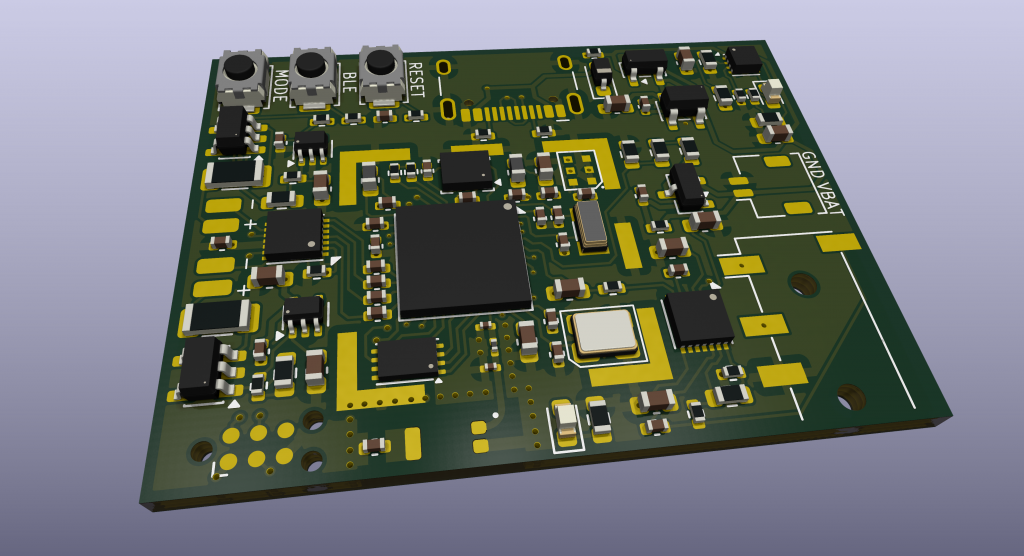
The Labyrinth 1 development platform serves as a hardware and firmware “sandbox” for wearable health technology.
Created by Dr. Igor Sobyanin and Dr. Mark Fletcher, it enables advanced prototyping before moving to final on-device board construction.
Labyrinth 1 allows for the detailed testing and optimization of:
- New components and configurations: Including ICs for power management, antenna layouts, and actuator drivers
- Software: Novel digital signal processing (DSP) and custom firmware
- Manufacturing parameters: Key variables vital for producing high-quality printed circuit boards
Our apps
CWPT
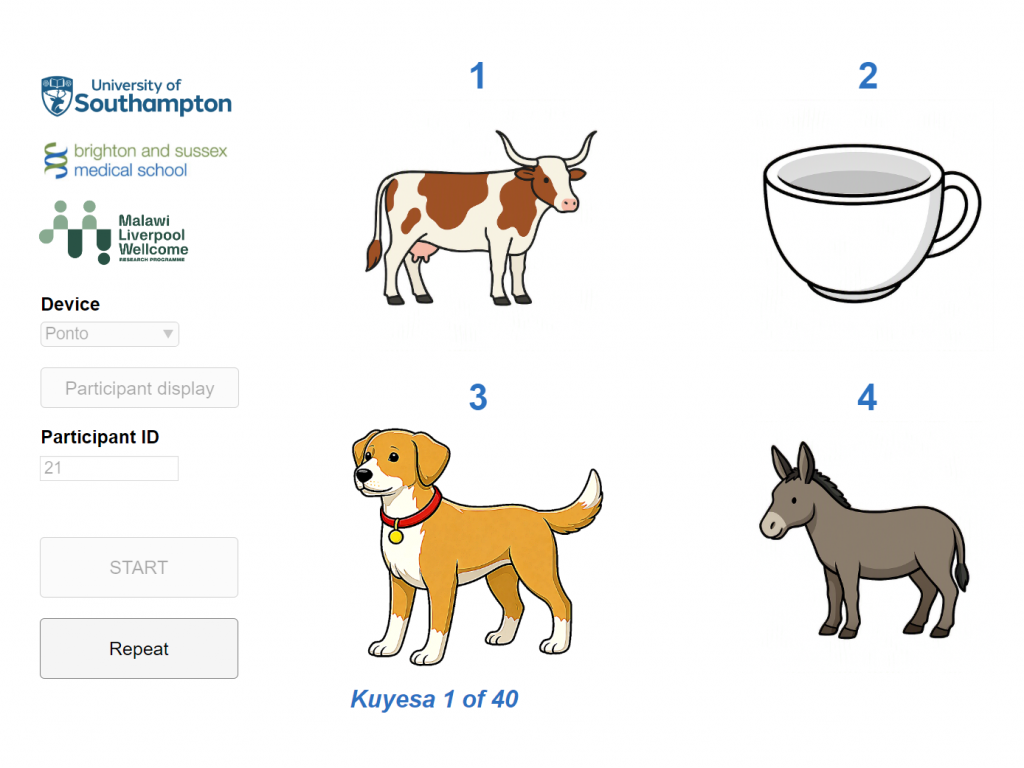
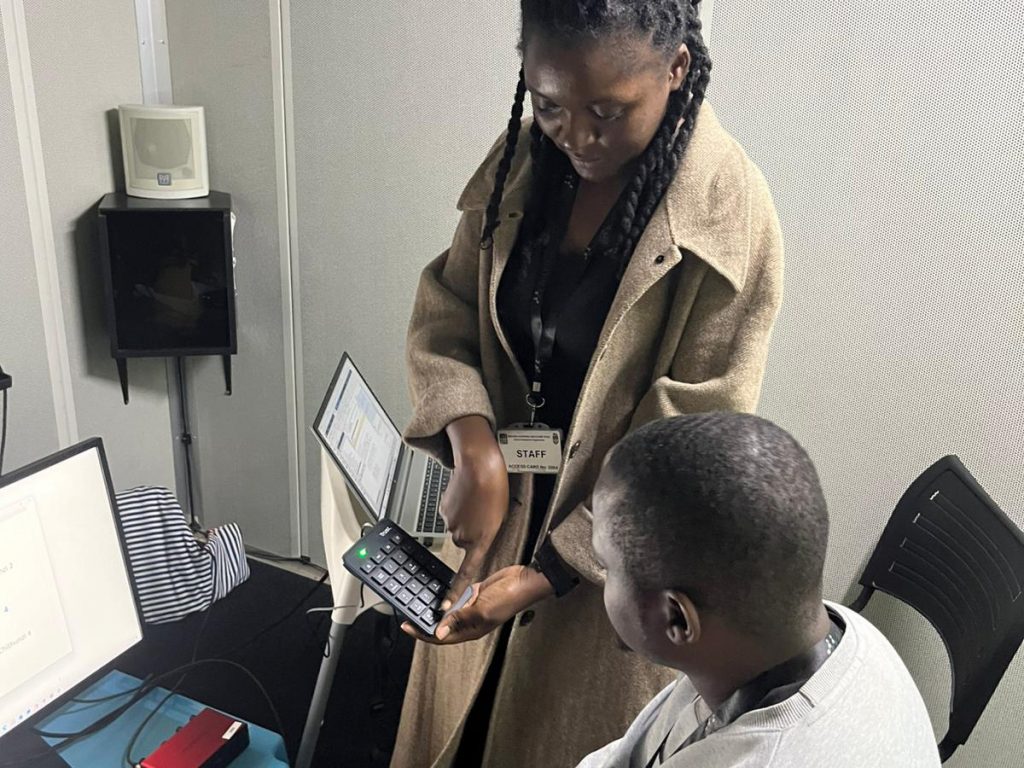
The Chichewa Word-Picture Test (CWPT): Created by Dr. Mark Fletcher in collaboration with Dr. Alan Sanderson and Nyashadzashe Marapira, this app is currently supporting clinical research with children and adults in Malawi.
EHS Audiometer
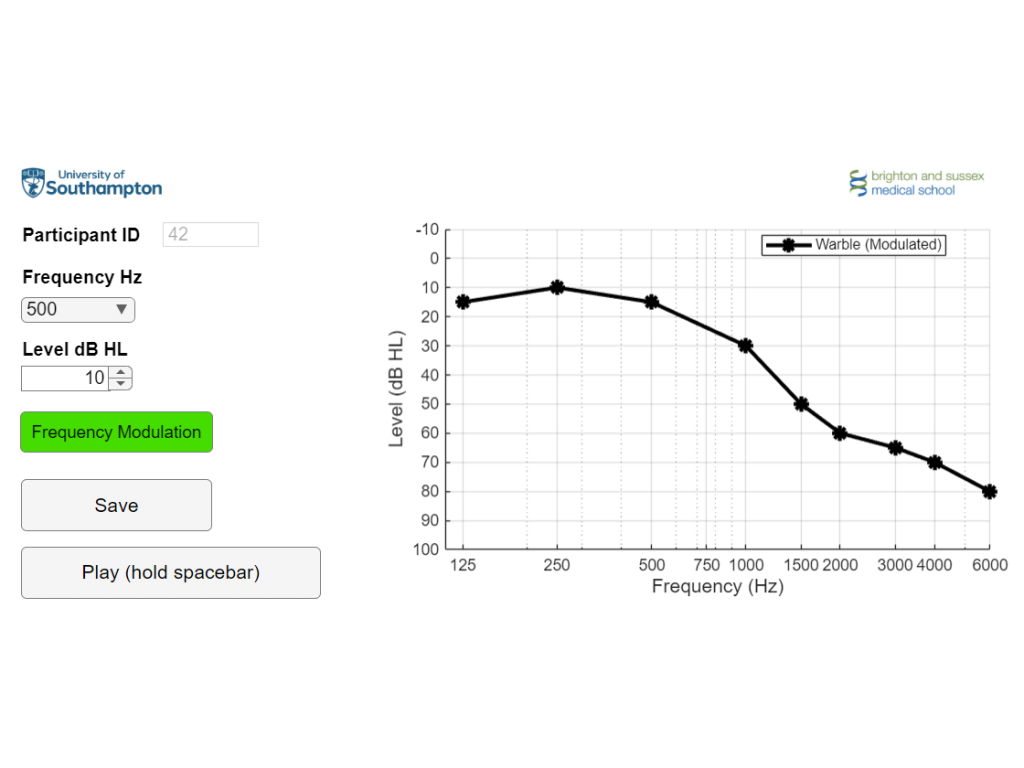
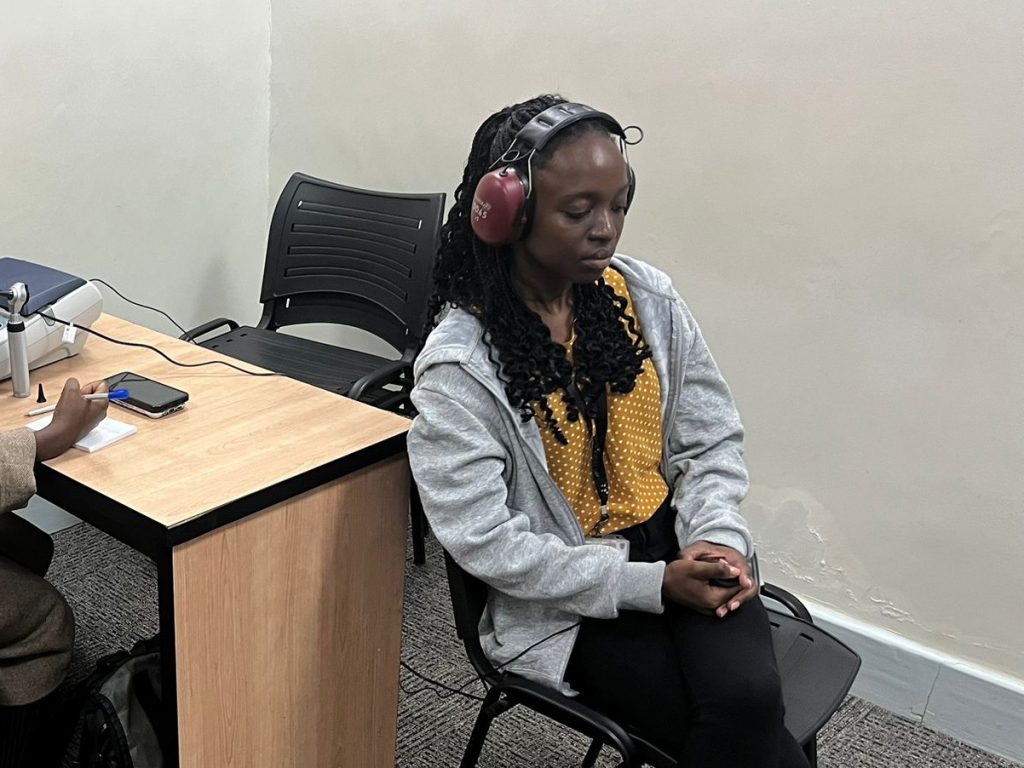
Flexible Software Audiometer: Designed by Dr. Mark Fletcher in collaboration with Dr. Alan Sanderson, this platform provides a customizable hearing assessment tool for our ongoing research projects in the UK and Malawi.
USAT
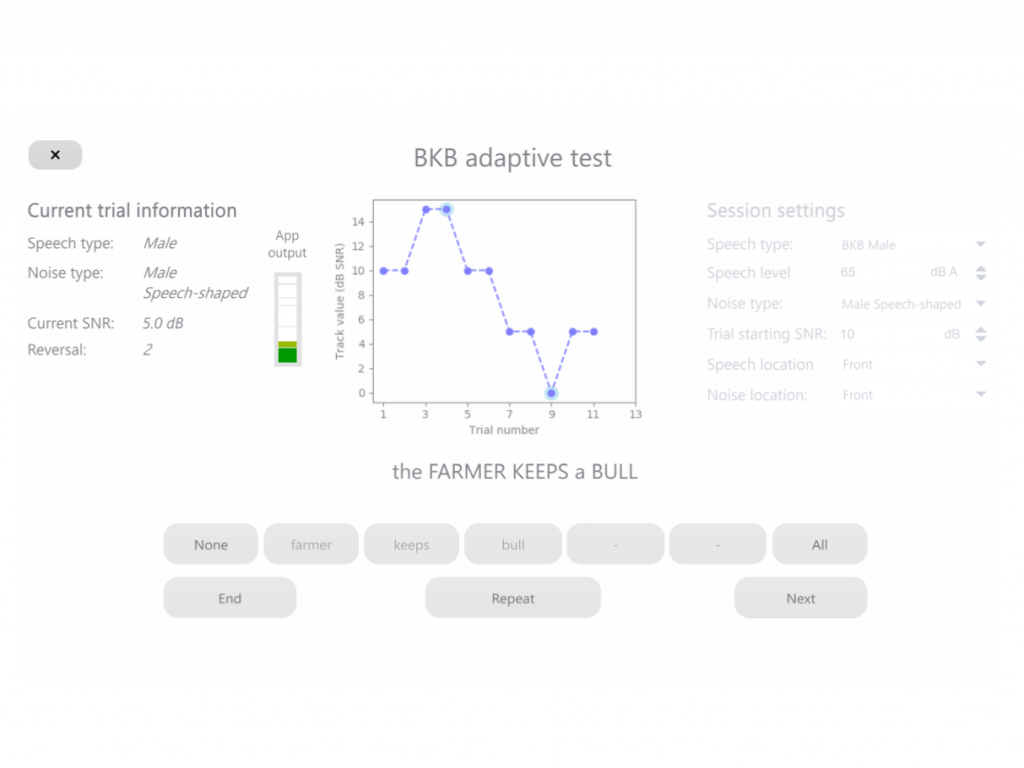
The University of Southampton Audiological Testing (USAT) app: Developed by Dr. Mark Fletcher and Dr. Sam Perry, USAT is an established tool used daily across multiple clinical services, including the University of Southampton Auditory Implant Service.